Please note, we are an Online store.
Visitation to shop premises by appointment only.
Tel: 061 533 3083 or 064 041 1389
Ceramic Coating Application Guide South Africa: Climate-Tuned Process

If you’ve been following a generic ceramic coating application guide from a European or American detailing channel, there’s a good chance it’s leading you astray. South Africa’s environment, brutal UV, Highveld heat, coastal humidity, and fine red dust, creates conditions that demand a local approach. This ceramic coating application guide for South Africa covers product selection, prep, application, curing, and long-term maintenance, tuned specifically for what SA conditions actually throw at a coating.


Why SA Climate Makes Ceramic Coating Application Different


South Africa gets some of the highest UV index readings in the world. Midsummer UV index hits 11–12 in both Gauteng and the Western Cape, classified as extreme. That sustained UV load accelerates paint oxidation, degrades unprotected clear coats faster than in temperate climates, and puts more stress on any coating sitting on top.


Heat compounds the problem. On the Highveld, summer afternoon temperatures routinely exceed 35 °C. At that temperature, a ceramic coating can flash in under 60 seconds, leaving almost no time for even spreading or high-spot removal. Experienced Johannesburg applicators often restrict coating work to early mornings specifically to avoid this.


The Cape adds a different challenge: high coastal humidity and wide diurnal temperature swings. Humidity above 70–75% slows solvent evaporation during the flash stage and increases the risk of a hazy, high-spot-riddled finish. Inland areas like the Northern Cape swing the other way, extremely dry air accelerates flashing unpredictably.


A generic international guide assumes moderate, stable conditions. SA rarely delivers those. That’s why local knowledge matters here, and it’s why Auto-DNA has been advising South African detailers and enthusiasts since 2011, with direct insight into which products and techniques actually work under local conditions.


Choosing the Right Ceramic Coating for South African Conditions


Professional-grade vs. consumer-grade coatings


Professional-grade coatings, sometimes called pro or installer-grade, typically carry higher SiO2 or SiC concentrations, longer warranty periods, and tighter application windows. That last point matters in SA: a product with a 2-minute flash window is harder to manage on a hot Highveld afternoon than a consumer product engineered with more forgiving open time.


Consumer-grade coatings sacrifice some ultimate hardness and longevity but are designed to be more workable in variable conditions. For a first-time applicator in SA summer, a consumer-grade product applied correctly will outperform a pro-grade product rushed and high-spotted in the heat.


Match the product tier to your skill level, your working environment, and the season. A climate-controlled garage changes the equation significantly.


Best ceramic coating brands available in SA


Two products consistently perform well under local conditions and are stocked by Auto-DNA: CarPro Cquartz and Artdeshine Graphene.


CarPro Cquartz is a proven benchmark, strong hydrophobics, reliable heat resistance, and a well-documented application process that SA applicators have refined over years of use. The graphene-enhanced variants offer improved thermal dissipation, which is directly relevant to vehicles parked in full SA sun.


Artdeshine Graphene brings graphene technology into the mix, with good slickness, self-cleaning behaviour, and solid UV resistance ratings that suit the local environment. It’s regularly used by accredited applicators across South Africa.


When evaluating any coating for SA use, look for: SiO2 or graphene concentration listed by the manufacturer, a heat resistance rating above 200 °C, stated hydrophobic longevity under high-UV test conditions, and warranty backing that the local distributor can actually support.


Browse the full range of ceramic coatings suited to SA conditions at auto-dna.co.za, the product listings include spec details so you can match coating to use case before you buy.


Ceramic Coating Prep: The Most Important Step


No coating fixes bad prep. In SA’s dusty, high-UV environment, paint arrives at application day in worse shape than in cooler, shadier climates. Cutting corners on preparation locks every defect, every swirl, every oxidation spot, permanently under a hardened ceramic layer.


Decontamination and paint correction


Work through the decon sequence in order:


  1. Snow foam, thick pre-soak to loosen road grime, dust, and organic contamination without touching the paint.

  2. Contact wash, two-bucket method with a quality wash mitt; rinse thoroughly.

  3. Iron remover, spray on, allow to dwell, watch the purple reaction as ferrous particles dissolve. SA roads deposit significant brake dust and iron contamination. Don’t skip this step.

  4. Clay bar, after iron removal, clay the entire surface to lift embedded contamination that washing can’t shift. This is what creates a truly smooth base.


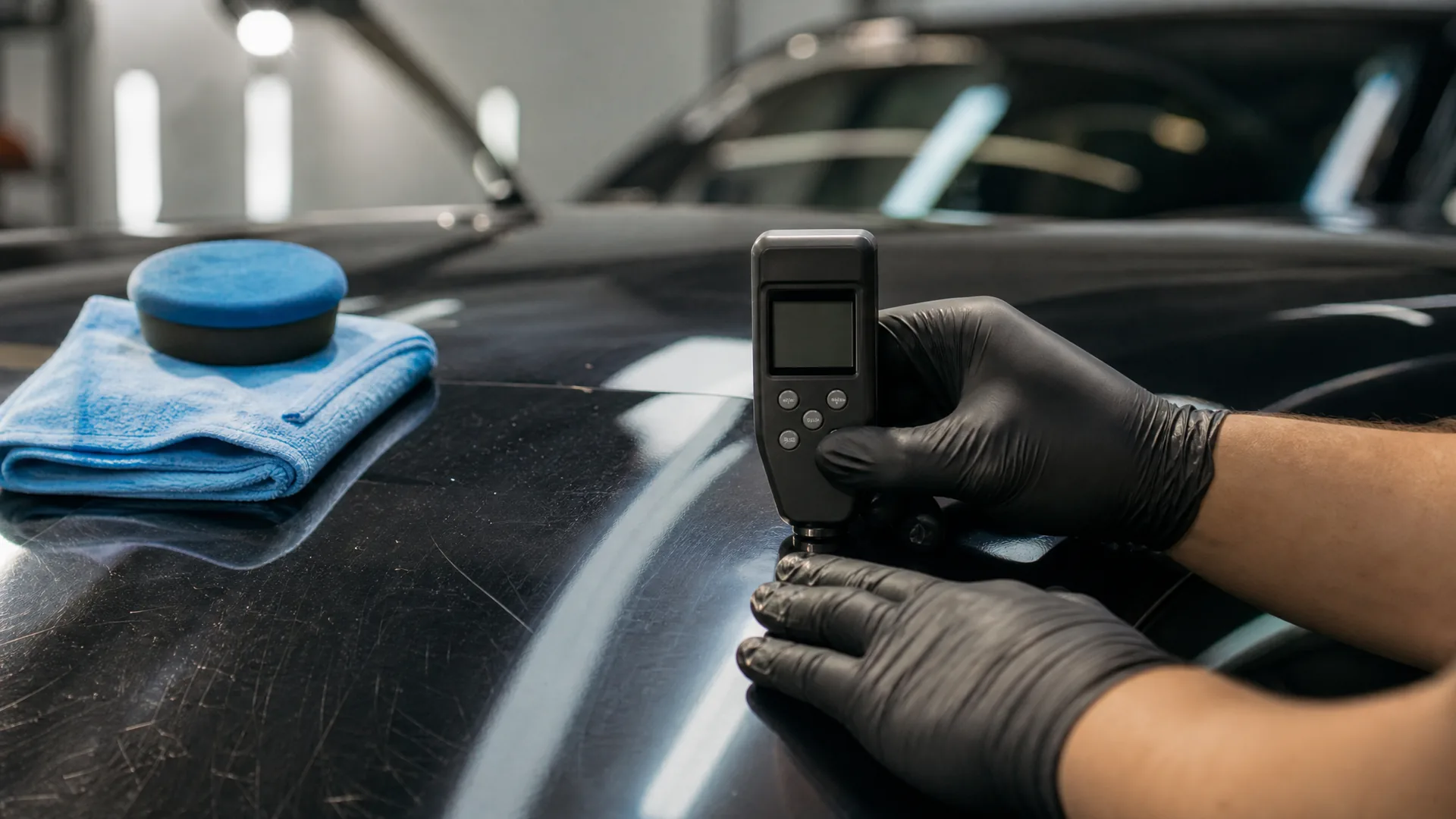
After decon, inspect the paint under a strong panel light or dedicated inspection lamp. SA’s UV load means oxidation and micro-marring are common even on relatively young paint. If you see swirls, haze, or oxidation, correct them now. A single-stage machine polish with a light compound handles most correction. Paint correction before coating is rarely optional in this market, it’s standard practice.


Panel wipe-down and IPA prep


Once correction is complete, wipe every panel with a dedicated pre-cleaner such as Carpro Eraser or MotoVana Prep solution. This removes polish oils, residue, and any remaining contamination. Work panel by panel and use clean microfiebr cloths. Any oil left on the surface will cause the coating to fish-eye or bond unevenly.


The panel must be bone dry and at ambient temperature before you open the coating bottle. Don’t prep in direct sunlight, even at this stage, a warm panel causes problems.


How to Apply Ceramic Coating: Step-by-Step


Working environment and temperature


The ideal application window is 15–25 °C, with humidity below 70%, out of direct sunlight and away from wind. In SA summer, this means working indoors or in deep shade, typically before 09:00 in Gauteng. In Cape winters, morning temperatures can drop below 15 °C, coating at 12 °C significantly slows the flash and makes it harder to judge when to buff.


If you don’t have a climate-controlled space, time your session carefully. A cool, overcast Cape morning in autumn or spring is often ideal working weather.


Application technique and panel sections


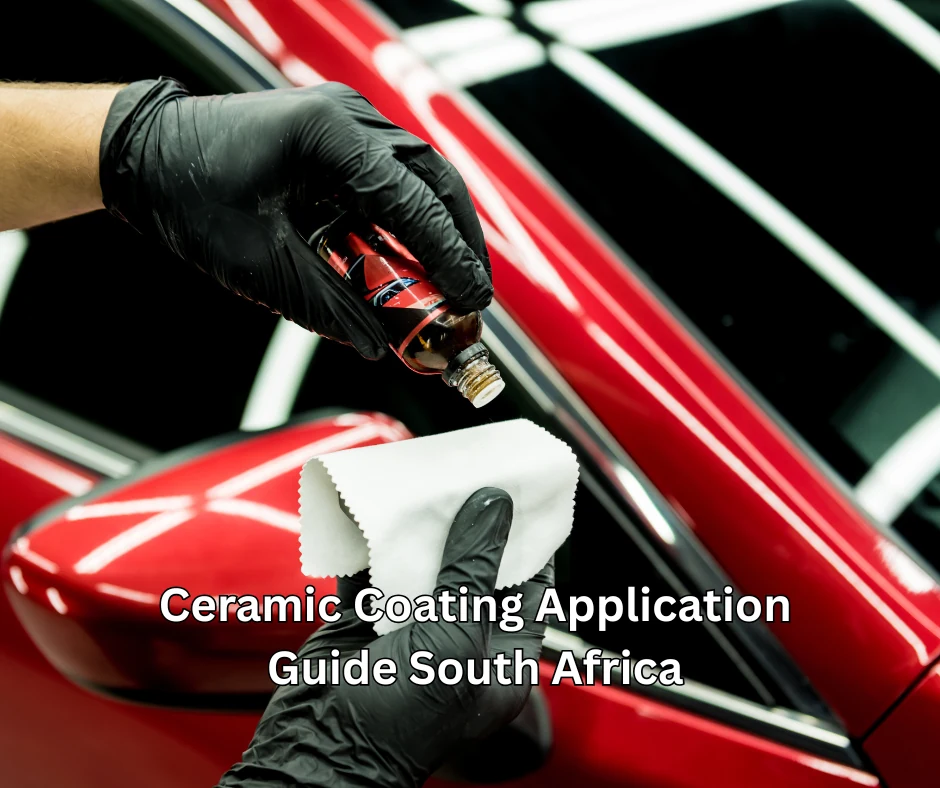
  1. Prime the applicator, wrap a suede applicator block in a clean suede cloth. Add 5–8 drops of coating to the cloth. Less is more; flooding the panel causes waste and high-spots.

  2. Work one section at a time, bonnet, roof, each door, each quarter panel. Don’t attempt large panels in one go.

  3. Apply in a cross-hatch pattern, horizontal passes followed by vertical passes. This ensures even coverage with no missed strips.

  4. Watch for flash, the coating will begin to rainbow and haze as the solvents off-gas. Flash time varies: in Gauteng summer heat it can be 30–60 seconds; on a cool Cape morning it may be 2–3 minutes. Learn to read the surface, not the clock.

  5. Buff high-spots immediately, once the panel shows that rainbow haze, take a clean, soft microfibre levelling cloth and wipe the coating level with light, overlapping passes. Work quickly. High-spots left to fully harden are extremely difficult to remove without machine polishing.

  6. Inspect under a panel light before moving to the next section. Catch problems now, not after the car has cured overnight.


The most common application mistakes are: working too large a section, applying too much product, buffing too early (before the flash), or buffing too late (after hardening begins). In SA heat, the margin for error on flash timing is narrow, if in doubt, work smaller sections.


Ceramic Coating Curing Time in SA Conditions


Ceramic coatings cure in two distinct stages. The first is the surface flash and initial set, the coating becomes touch-dry within minutes of application. The second is the full chemical cure, where the silica network completes its cross-linking deep into the layer. These are not the same thing, and confusing them is a common mistake.


In SA summer conditions, high ambient temperatures accelerate the surface flash noticeably. This does not shorten the full cure window. Most professional-grade coatings require 24–48 hours before the vehicle can safely contact water, and 5–7 days (sometimes up to 21 days for some formulations) for full chemical hardness. Check the specific product datasheet, curing schedules vary between brands.


During the initial cure period:


  • Keep the vehicle completely dry for at least 24–48 hours.

  • Store out of direct sunlight. SA’s UV intensity during initial cure can cause uneven cross-linking and surface stress on some formulations.

  • Avoid bird droppings, tree sap, and water contact. Contaminants bonding into an uncured surface are difficult to remove cleanly.


In SA winter, lower overnight temperatures slow the final cure. If you’re coating in Johannesburg in June, allow the full upper end of the manufacturer’s stated cure window before exposing the car to water or washing.


Ceramic Coating Maintenance: Keeping It Performing Year-Round


A properly applied and cured ceramic coating significantly reduces the effort of keeping a car clean, but it isn’t self-maintaining. In SA’s high-UV, high-dust environment, the coating’s topmost hydrophobic layer degrades faster than it would in a temperate climate. The right maintenance routine extends coating life substantially.


Wash routine:


  • Use a pH-neutral car shampoo every time. Alkaline or acidic products strip the hydrophobic layer. Two-bucket method or a quality foam lance pre-soak, followed by a soft wash mitt.

  • Avoid automatic brush washes entirely. The abrasive brushes and harsh chemicals used in most tunnel washes will degrade a ceramic coating rapidly.

  • Rinse with filtered or deionised water where possible, SA hard water leaves mineral deposits that etch into the coating surface over time.


Maintenance sprays:


  • Apply a dedicated ceramic maintenance spray or SiO2 top-up spray every 6 months. In SA’s UV environment, this is the single most effective way to extend coating longevity. It refreshes the hydrophobic layer and adds a sacrificial barrier over the base coating.

  • Some coatings also support annual professional inspection and recoat of the most UV-exposed panels (bonnet, roof) before full degradation sets in.


What to avoid:


  • Iron removers and tar removers with high acidity or alkalinity used directly on a coated surface will attack the coating. Use coating-safe decon products.

  • Harsh all-purpose cleaners (APCs) at full concentration on painted, coated panels.

  • Waterless wash products on heavily contaminated surfaces, dragging grit across a coated surface under light lubrication causes swirling.


Ceramic coating maintenance isn’t complicated, but it does require consistent use of the right products. Using the wrong chemistry once won’t destroy a coating, but regular misuse will shorten its effective life meaningfully, especially in this market.


For the right products to match every stage of this process, from decon and correction through to application and maintenance, browse Auto-DNA’s ceramic coating range at auto-dna.co.za. The products stocked are selected for how they perform under South African conditions, not just on a spec sheet.

A Journey Through Time: The Evolution of Car Paint

A Journey Through Time: The Evolution of Car Paint

When we look at the evolution of paint over the years, it becomes clear that the Car Care Products and techniques for care have also changed.

Best Car Care and Detailing Products South Africa

Lets talk about the Best Car Care Products for Your Car in 2025

Why is it important to take good care of your car and especially the exterior?

There are several factors that affect the overall appearance of your car’s paint:

Oxidation, Industrial Fall out, Swirls and Scratches.

What makes a good snow foam?

Best Snow Foam 2025

What makes a good snow foam? Before you get your buckets and wash mitt out you should be looking at giving the car a pre-wash.
Cheap Car Care products could damage your car’s paint and interior

Cheap Car Care products could damage your car’s paint and interior

Yes, that is correct! Cheap Car Care products could potentially damage your car’s paint and interior.

Such products may not be as effective as quality car care products and can contain harsh chemicals that

We have a wide selection of products and the Best International Brands.

If you did not find what you were looking for, try Searching for it with the below search option.

 Click on the Search button below and enter a word   ( ex. Shampoo – will bring up all our shampoo’s)